- 01Why This Question Gets Asked So Often
- 02What OpenClaw Actually Is
- 03Using OpenClaw Directly: Yes, You Need to Code
- 04Using OpenClaw Without Coding: Via a Platform
- 05The Honest Trade-Off Table
- 06Who Should Self-Host
- 07Who Should Use a Managed Platform
- 08A Nuanced Take on "No-Code"
- 09The Bottom Line
- 10FAQ
Why This Question Gets Asked So Often
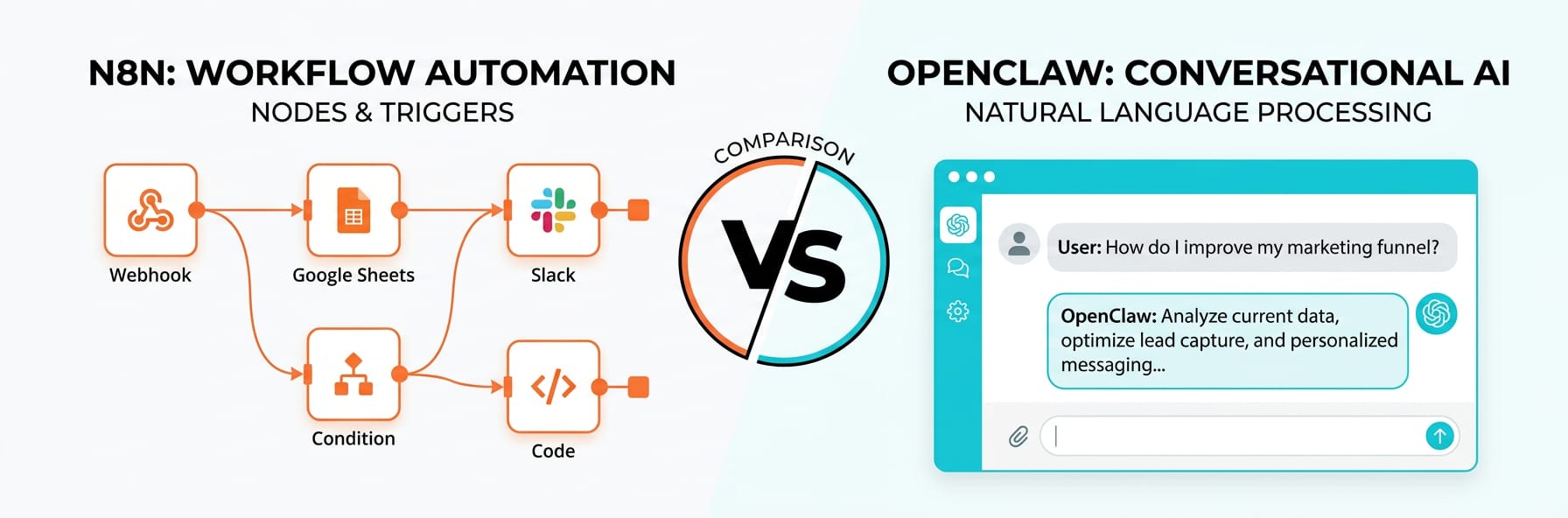
OpenClaw keeps showing up in conversations about AI agents. Developers talk about it on Reddit. It gets mentioned in the same breath as LangChain and n8n. Community managers stumble across it while looking for ways to add an AI bot to their Telegram group.
And then they ask the same question: do I need to know how to code?
The honest answer isn't a clean yes or no. It's a "yes, unless" — and understanding that distinction will save you a significant amount of time.
What OpenClaw Actually Is
Before getting into the coding question, it helps to be clear about what OpenClaw is.
OpenClaw is an open-source multi-agent framework. It provides the architecture for building AI agents — the underlying system that handles how an agent receives messages, processes them through an AI model, and sends responses back across different platforms like Telegram, Discord, or Slack.
Think of it like a well-designed engine. The engine is capable, well-built, and powerful. But an engine sitting on a workshop bench doesn't go anywhere on its own. You need to build something around it to make it useful — or find something that has already built around it for you.
That distinction is the entire answer to the coding question.
Using OpenClaw Directly: Yes, You Need to Code
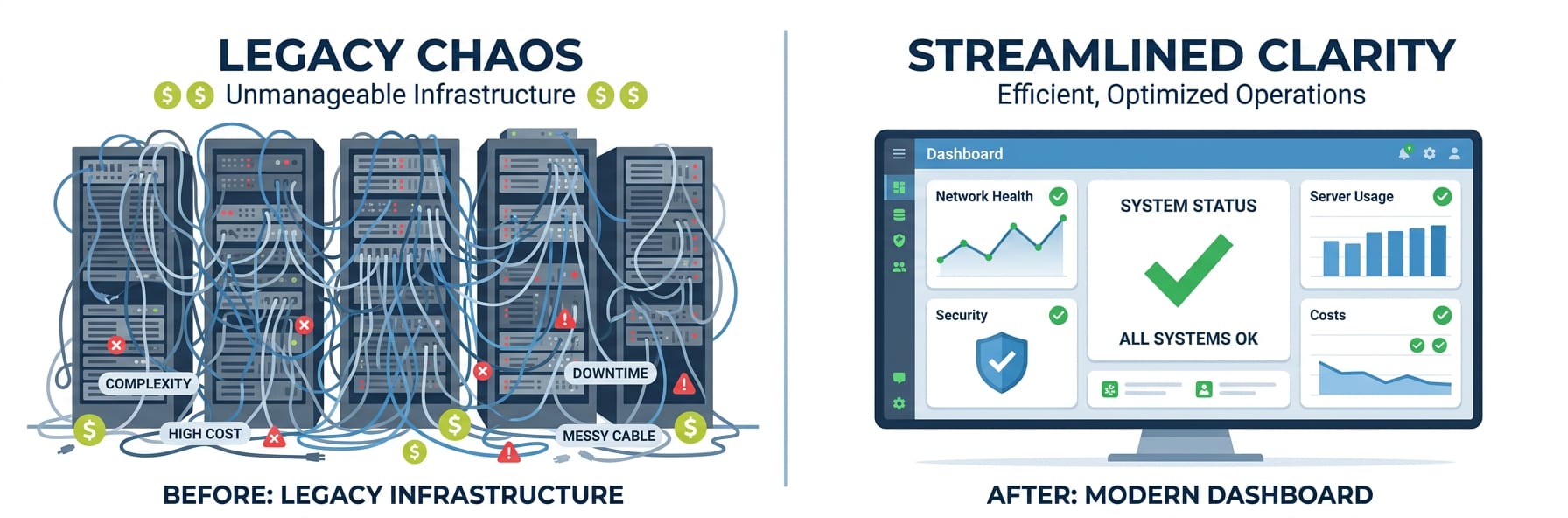
If you want to run OpenClaw yourself — clone the repo, configure the environment, connect it to your messaging platforms, deploy it somewhere it runs 24/7 — you need technical knowledge. There's no way around this.
Here's what self-hosting OpenClaw actually involves:
Setting up the environment. OpenClaw is a Python-based framework. You need Python installed, dependencies managed, and a working local environment before anything else happens.
Configuration. OpenClaw is configured through code and config files. You're editing YAML files, setting environment variables, and writing the system prompt and agent behavior in code. It's not hard if you've done it before. It's a steep cliff if you haven't.
Deployment. Getting it running on your laptop is one thing. Getting it running somewhere that stays on 24/7 — a VPS, a cloud provider, a container — requires server configuration, process management, and an understanding of how webhooks work with Telegram or Discord's APIs.
Maintenance. When something breaks (and something always eventually breaks — an API update, a dependency conflict, a server restart), you need to be able to diagnose and fix it. This is ongoing, not a one-time setup cost.
None of this is beyond a motivated non-developer who's willing to invest time. But it's not an afternoon project. People who've done it report spending days to weeks getting a production-ready setup working reliably.
If you're comfortable with the terminal, have worked with Python before, and have some experience deploying web services, OpenClaw is genuinely approachable. If those things are unfamiliar, you'll be learning them in parallel with learning OpenClaw — which multiplies the complexity significantly.
Using OpenClaw Without Coding: Yes, But Through a Platform
Here's the "unless" part.
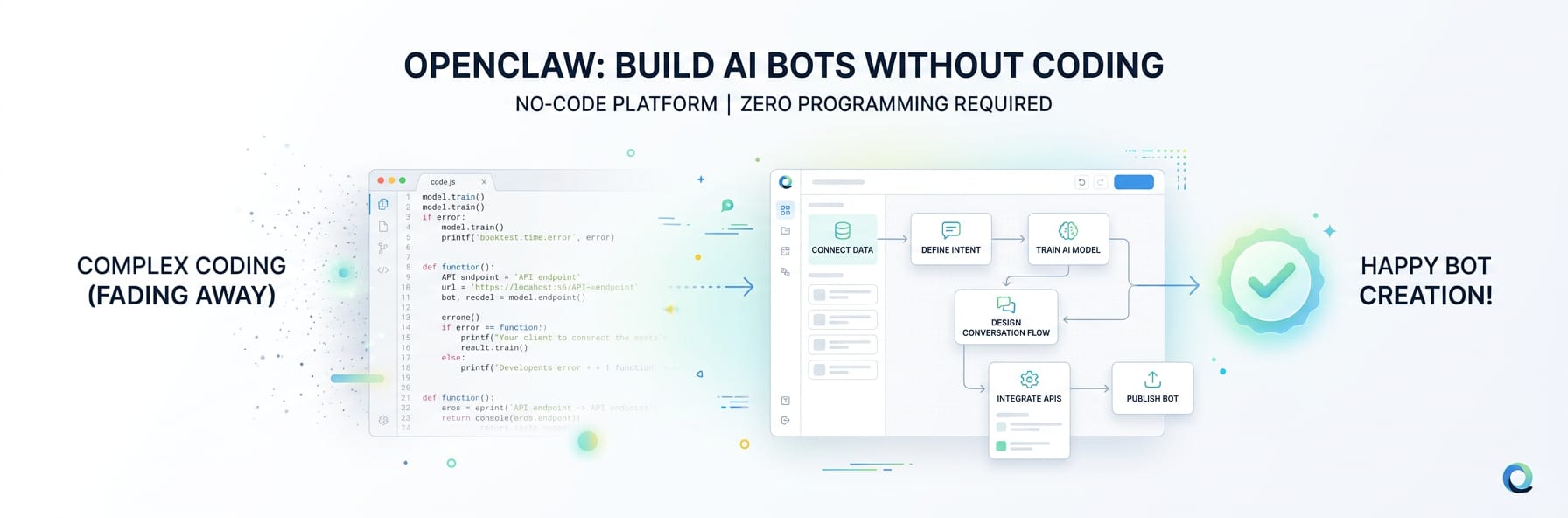
OpenClaw's architecture is sound enough that it's worth building on top of. Several platforms — including Weavin — run OpenClaw as their underlying infrastructure and provide a visual interface over the top of it.
When you use Weavin, you're using OpenClaw — you can deploy an OpenClaw agent without managing your own server. The same Avatar + Skills + Knowledge architecture. The same multi-platform agent system. The same model flexibility. You're just not touching the code layer underneath.
What you do instead:
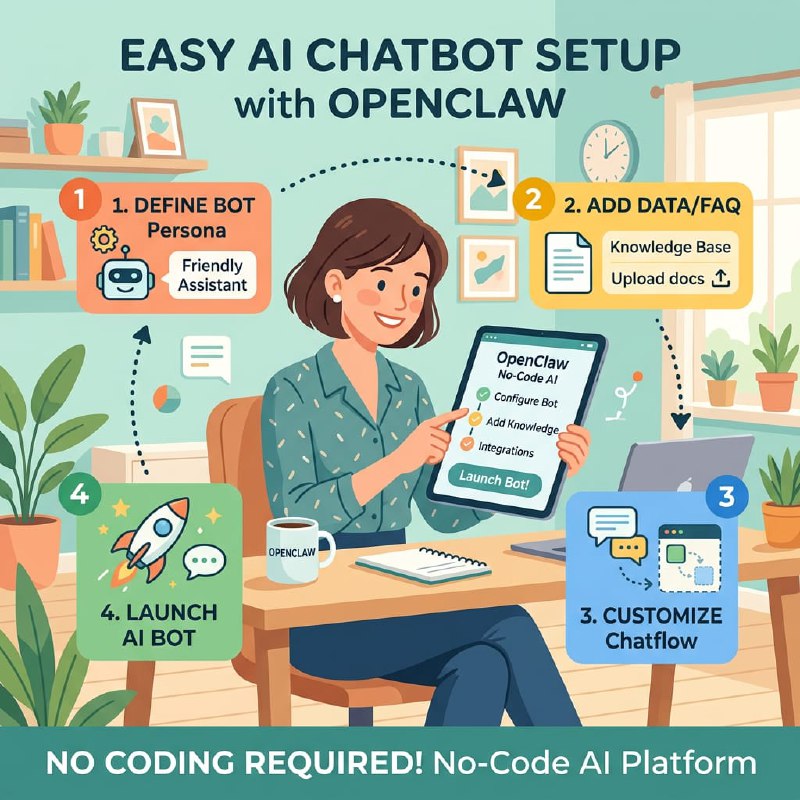
- Fill in a form to define your agent's name and personality
- Select which AI model you want (Claude, GPT, Gemini, or connect your own API key)
- Choose your platforms — Telegram, Discord, Slack, WhatsApp — and paste in a token
- Click launch
The infrastructure, the webhooks, the deployment, the uptime monitoring — all of that is handled. You configure the agent. Someone else runs the engine.
This is a real and legitimate way to use OpenClaw. You're not getting a watered-down version of the capability. You're getting the same agent architecture with the infrastructure abstracted away.
The Honest Trade-Off Table
| Self-hosted OpenClaw | OpenClaw via Weavin | |
|---|---|---|
| Coding required | Yes — Python, config files, deployment | No |
| Setup time | Days to weeks | ~5 minutes |
| Infrastructure management | Your responsibility | Handled |
| Customization depth | Unlimited — you control everything | High — personality, model, platforms, knowledge |
| Custom skill development | Full access | Via platform |
| Cost | Server costs + your time | $39.9/month per Avatar |
| Uptime responsibility | Yours | Handled |
| Good for | Developers, custom builds, heavy modification | Non-developers, community managers, fast deployment |
Neither path is objectively better. They're optimized for different people with different constraints.
Who Should Self-Host OpenClaw
Self-hosting makes sense if:
You're a developer building something custom. If you need to write custom skills, modify the core behavior, integrate with internal systems, or build something that a no-code interface can't accommodate, you need to run it yourself. The full power of an open-source framework is only accessible when you have direct access to the code.
You have specific compliance or data requirements. If your use case requires data to never leave your own infrastructure — certain enterprise contexts, regulated industries — you need to host it yourself. Managed platforms involve your data passing through their systems.
You're optimizing cost at scale. At very high message volumes, server costs plus your own API key costs may come out cheaper than a per-Avatar platform fee. This calculation usually only tips in favor of self-hosting at significant scale.
You want to contribute to or fork the project. OpenClaw is open source. If you're interested in the framework itself — improving it, adapting it, building something derivative — you need to be in the codebase.
Who Should Use a Managed Platform
A managed platform makes sense if:
You're a community manager, creator, or small team. You want an AI bot in your Telegram group or Discord server. You have a clear use case. You don't have a developer on hand and don't want to become one. Managed deployment gets you to the same place without the detour.
Your time is the constraint. Even if you could figure out self-hosting given enough time, that time has a cost. A developer who spends a week setting up infrastructure instead of building their actual product has made a trade-off that probably wasn't worth it.
You want to move fast and iterate. Managed platforms let you change your agent's behavior, personality, and connections immediately, without redeployment. The feedback loop is faster.
You're not sure yet if it's worth the investment. Testing the concept with a managed platform first — seeing whether your community actually uses a bot, whether the AI behavior works for your use case — before committing to infrastructure setup is a reasonable approach.
A Nuanced Take on "No-Code"
It's worth being precise about what "no-code" means here, because the term gets used loosely.
When a managed platform says you can use OpenClaw without coding, they mean you don't need to write code to set it up, deploy it, or maintain it. That's true.
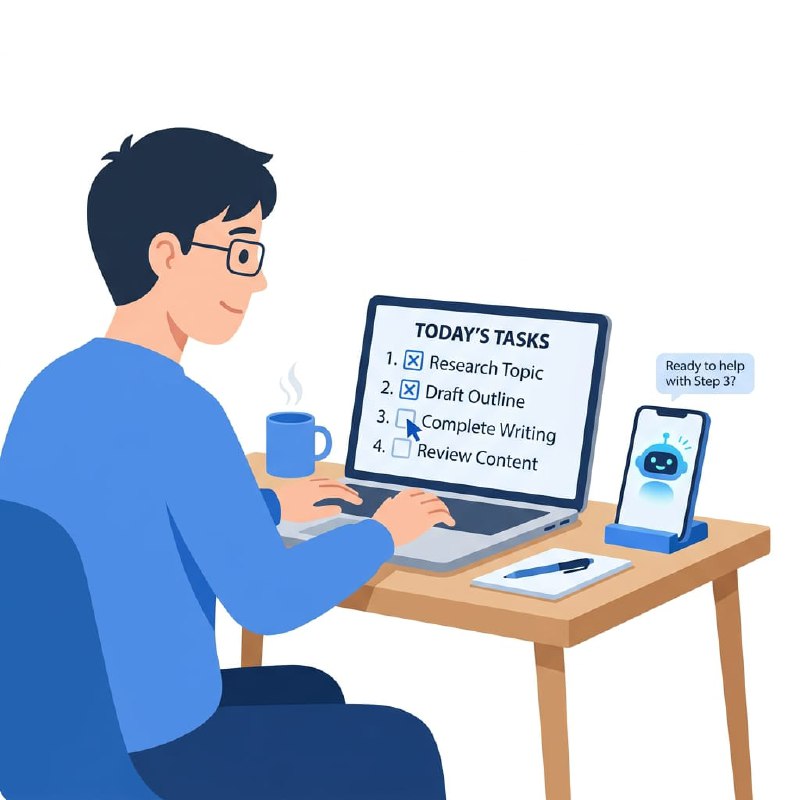
What "no-code" doesn't mean: you don't have to think carefully about what you're building. The part that actually determines whether your agent is good — the system prompt, the personality, the behavioral rules, the knowledge base — requires genuine thought and iteration. It's not programming, but it's also not just clicking a few buttons. Writing a clear, specific agent identity that produces consistent, on-brand behavior takes real effort.
The no-code part removes the technical barrier. It doesn't remove the thinking barrier. The best agents, on any platform, are the product of someone who thought carefully about what they wanted before they built it.
The Bottom Line
Can you use OpenClaw without coding?
Yes — if you use a managed platform built on OpenClaw. You get the same underlying architecture, multi-platform deployment, and model flexibility, through an interface that requires no technical knowledge to operate.
No — if you want to self-host it. Self-hosting requires Python, server configuration, and deployment knowledge. It's not insurmountable, but it's a real technical undertaking.
The right answer depends on what you're trying to build, how much time you have, and whether the additional flexibility of self-hosting is actually worth it for your use case.
For most community managers and small teams, it isn't. For developers building custom agent infrastructure, it is.
Pick accordingly.